

Every transfer you have ever sent. Every top-up, every payment, every rupiah that moved through a bank or an e-wallet. Somewhere, a database has all of it, tagged with your name, your NIK, your phone number. Not because anyone did anything wrong — that is simply what a financial system built entirely on permission looks like. You do not own your money. You are permitted to use it, by institutions that can see everything and revoke access at will.
Bitcoin was built as the alternative to that. This article is not investment advice, and we are not talking about price. We are talking about the one property of Bitcoin that gets mentioned least and matters most: it lets you hold value that nobody else can see, freeze, or take permission over. We are an education non-profit, and Bitcoin-only by design — this is not a case for “crypto” in general, it is specifically about the one asset engineered from day one to work without anyone’s permission.
Privacy is not a synonym for hiding something
Say “financial privacy” out loud and someone will assume you have something to hide. That reaction is itself the product of decades of financial surveillance being normalized as the default. Nobody thinks it’s strange that you close your curtains at night. Nobody thinks the lock on your front door means you’re a criminal. Financial privacy is the same instinct applied to money — the basic, unremarkable right to not have every transaction you make catalogued, cross-referenced, and stored indefinitely by parties you never chose to trust.
The Universal Declaration of Human Rights, Article 12, protects people from “arbitrary interference with… privacy.” Money is not exempted from that. It just took the digital era to make ignoring it easy, because digital money leaves a perfect, permanent trail by default — and almost nobody stopped to ask if that was the trade we wanted to make.
Indonesia’s financial system was built to see everything
This is not paranoia — it’s the design. Every bank account is tied to your NIK. Every e-wallet asks for your e-KTP. PPATK, the Financial Transaction Reports and Analysis Center, exists specifically to monitor and flag transactions across the entire financial system. QRIS has made cash feel almost old-fashioned in five years, and every QRIS payment is, by construction, traceable end to end.
None of this is a conspiracy. Most of it exists for legitimate reasons — anti-fraud, anti-money-laundering, tax collection. But “legitimate reason for the system to exist” and “you should have zero financial privacy” are two different claims, and Indonesia’s rapid shift to a fully cashless, fully tied-to-identity financial system has collapsed the distance between them faster than almost anywhere else in the world. The infrastructure to watch every transaction of every citizen already exists. Whether it’s used well today doesn’t change the fact that it exists, and that infrastructure doesn’t go away when the people running it change.
Why “I have a wallet on an exchange” is not privacy
This is the trap almost every beginner falls into, and it’s worth being blunt about it: Bitcoin sitting on an exchange gives you none of this. You went through KYC to open the account. The exchange has your full transaction history, your balance, your withdrawal addresses, tied directly to your legal identity. It can freeze your account. It can be compelled to hand over your data. It can go bankrupt with your coins inside it. None of that is a flaw in Bitcoin — it’s a description of what a custodian is, and a custodian is exactly what you’re using when someone else holds your keys.
Bitcoin’s privacy and freedom properties only activate the moment you hold your own keys. Before that, you own a claim on Bitcoin, backed by a company’s promise. After that, you own Bitcoin.
What self-custody actually gives you
- No counterparty. Nobody can freeze, seize, or “review” your Bitcoin, because nobody but you holds the keys that move it.
- No permission required. You do not ask a bank if you’re allowed to send your own money. You just send it.
- No single point of failure. An exchange going bankrupt, getting hacked, or getting a government order does not touch coins that were never on it.
- Verification, not trust. Running your own node (see why running a node matters) means you check the rules yourself instead of taking someone else’s word for what Bitcoin’s supply and rules actually are.
None of this makes you invisible. Bitcoin’s ledger is public — every transaction is on a blockchain anyone can read. What self-custody removes is the layer that ties that ledger directly to your government ID by default, and the counterparty who can act on your money without your consent. If you want to go further and separate specific transactions from each other, techniques like coinjoin address that directly — we cover it in Bitcoin and Privacy.
The honest caveat
Privacy is not an excuse to break the law, and we are not suggesting it is. Selling Bitcoin in Indonesia is still a taxable event under PMK 50/2025 — see our guide on how to sell Bitcoin safely — and self-custody changes who can see and control your money, not what you owe. What it changes is the default: instead of every transaction being visible to a bank, an app, and whoever they report to, only you decide who sees what. That is a meaningfully different world, and it is the world Bitcoin was actually built to create.
Why this is worth caring about before you think you need it
The people who most need financial privacy rarely get to build it in the moment they need it. Activists, journalists, and ordinary people living under governments that have used financial systems to punish dissent didn’t wake up one day and decide to learn self-custody — by the time you need financial privacy urgently, it’s usually too late to set it up safely. We’ve written before about Bitcoin and oppressive governments, and about the other side of this — what happens when governments issue their own fully-surveilled digital currency instead: see the CBDC tracker from the Human Rights Foundation. A CBDC is the surveillance-by-default model taken to its logical end. Bitcoin self-custody is the opposite model, available today, for free, to anyone who sets it up.
Getting started, in the right order
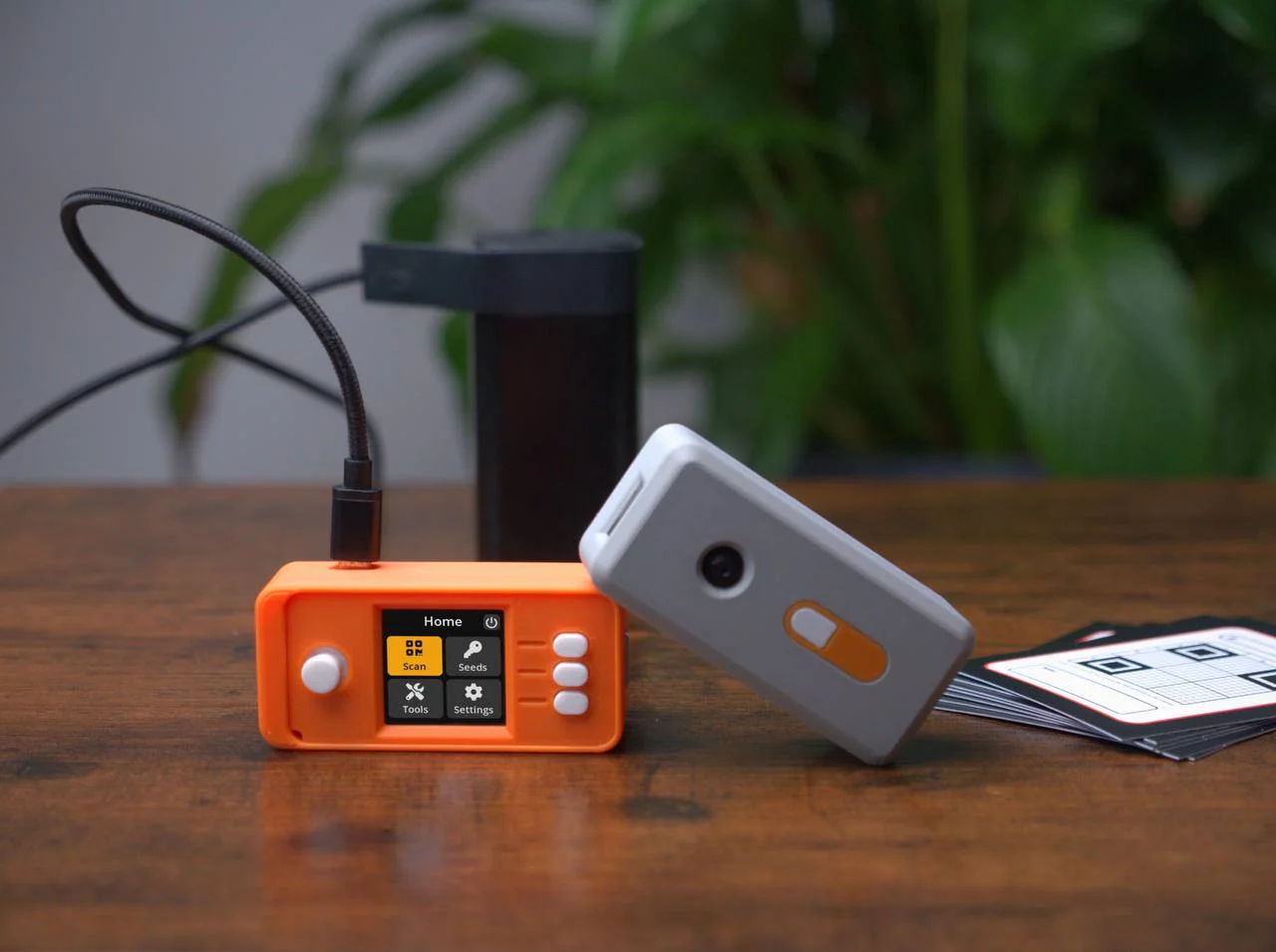
You do not need to become a cryptography expert to hold your own keys. You need, in order: a wallet where you control the seed phrase, a habit of backing that seed phrase up somewhere offline and safe, and — once you are holding a meaningful amount — a hardware wallet that keeps your keys away from an internet-connected phone or laptop entirely. Our guide to securing your Bitcoin walks through exactly that, step by step. If you’re holding funds for a family, a business, or a community treasury, multisignature wallets remove the single point of failure entirely — no one key, including yours alone, can move the funds.
If any of this feels like a lot to take on alone, it isn’t something you have to. Financial sovereignty was never meant to be a solo project — it’s exactly what the My First Bitcoin course and our 40+ monthly meetups across Indonesia exist for: free, non-profit, and taught by people who set up their own self-custody first because they wanted the same thing you’re reading this to get closer to.
Your money being visible to everyone by default was never the natural state of things. It’s a design choice that digital finance made for you, quietly, without asking. Bitcoin, held in your own keys, is the option to make a different choice.